All posts
Gen Z Against AI

Pixelated Paradox
According to Deloitte, 76% of Gen Z have used generative AI tools like ChatGPT or Claude, the highest adoption rate of any generation. Which is why recent YouGov polling in June surprised us. When asked whether they’d snap their fingers to make generative AI disappear forever, 55% of 18-24 year olds said yes, a sizeable leap from the UK average of 42%.
It leaves Gen Z in a pixelated paradox, representing both generative AI’s biggest supporters and generative AI’s biggest sceptics.
So, what’s driving this conflict of interest? What’s occurring as a result? And most importantly, what are the opportunities for brands? After all, these “digitally native” doom scrollers are the target audience in more client briefing documents than we’d probably dare to list.
Analogue Anarchy
It’s no coincidence that the call from Gen Z for change isn’t just loud, it’s analogue too. In a turn of events where agents are replacing action and algorithms are deciding taste, young consumers are shaping their future by taking it off screen and into the real world.
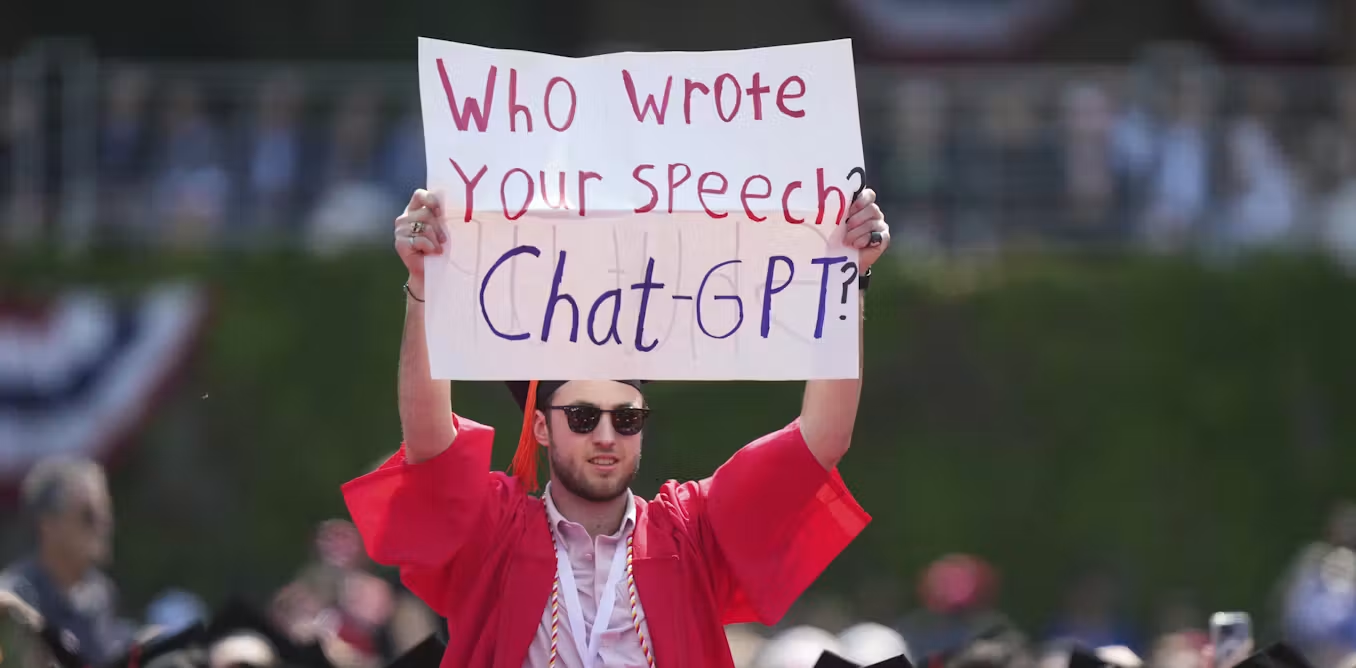
Throughout this year’s graduation season, we saw multiple ceremonies disrupted by students booing or jeering pro-AI speakers. Former Google CEO Eric Schmidt proclaimed that he “knows what many of you are feeling”, but that AI will inevitably “shape the world” and that the crowd needed to adapt.
And in all fairness, adaptation is exactly what they’re doing. Albeit not in the way that the algorithm expected.
After years of steady decline, sales of wired earphones in the US surged by 20% in early 2026. Pinterest has reported that searches for “handwritten letters” and “cute stamps” are up 45% and 105% respectively. So-called ‘dumb phone’ manufacturer, Dumb.co, has more than 5,000 active users of its social media free devices with a simplified UI that still includes ridesharing services like Uber. The Washington DC start-up’s typical customer is a 24-year-old woman.
Embracing the backlash
We know that great creative thinking has the power to confront big societal challenges. In the words of Apple’s co-founder Steve Wozniak, at the heart of his own commencement speech to graduates this year, humans have their own version of AI: “actual intelligence”. It’s increasingly clear there’s a space for brands to succeed in the real world, so here are just some examples.
In real life
Be tangible, like K18.
In August, K18 showed how activations become more talkable when they’re taken offline. Nicknamed ‘Tumblehair’, the 10ft high ball made of real human hair rolled around the streets of Manhattan, New York. Less CGI, more IRL; it created a weird, wonderful and wacky pushback to the recent surge in faked PR stunts where you’re left thinking, “did this really happen?”
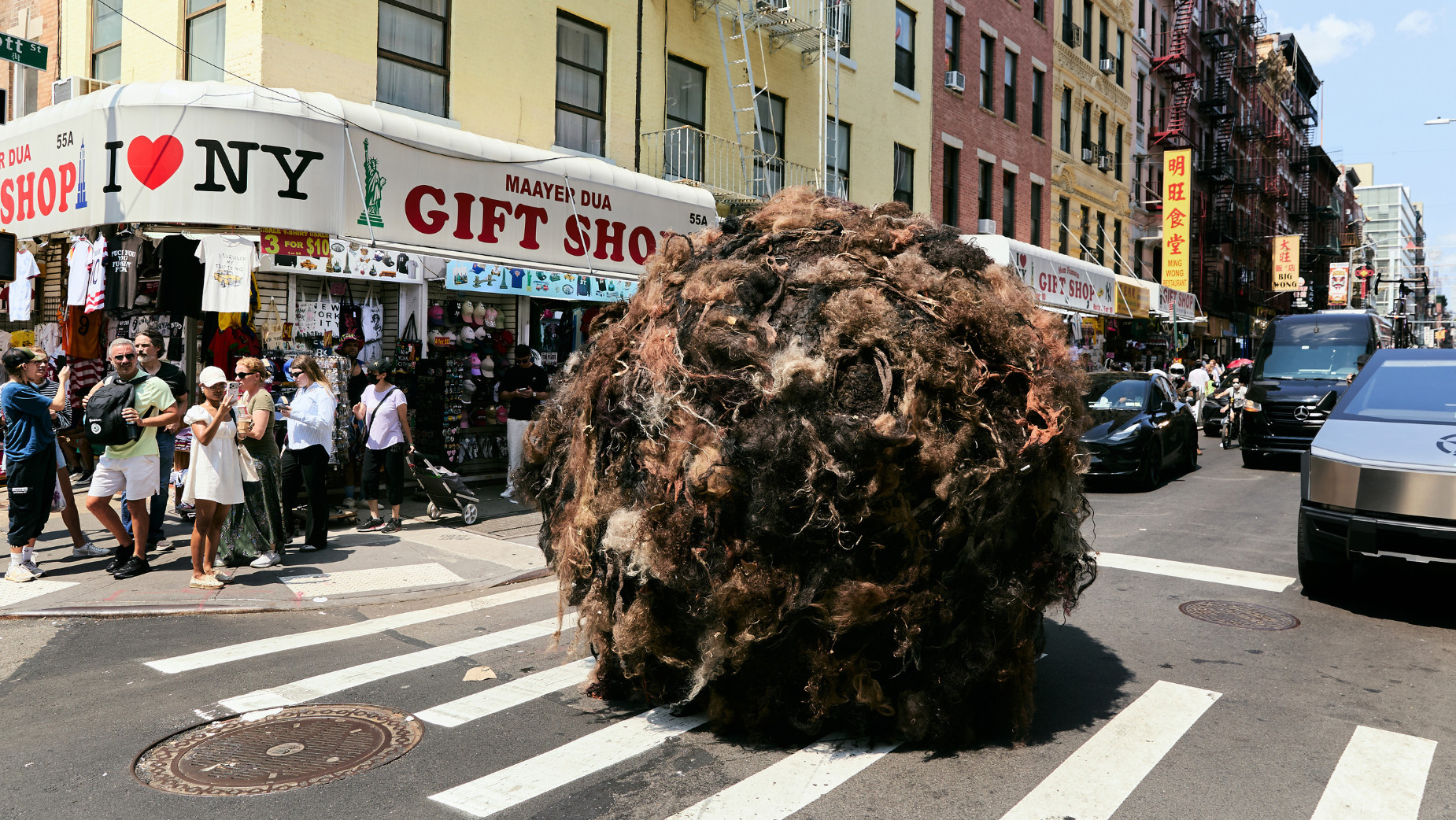
70% of marketers agreed that brands should increase their spend on physical touchpoints over the next year. Source: ANA, Masters of Marketing Conference 2026
For real life
Be tactical, like Polaroid
Polaroid’s The Camera for Analog Life campaign positioned the brand as a timely antidote to AI. Building on an already booming resurgence in film use, its OOH celebrated emotional, imperfect and deeply human moments beyond the capabilities of today’s generative models. Ironically, it took a platform introduced in 1948 to kick-start a new frontier, even if some of the photos might make it back onto the grid.
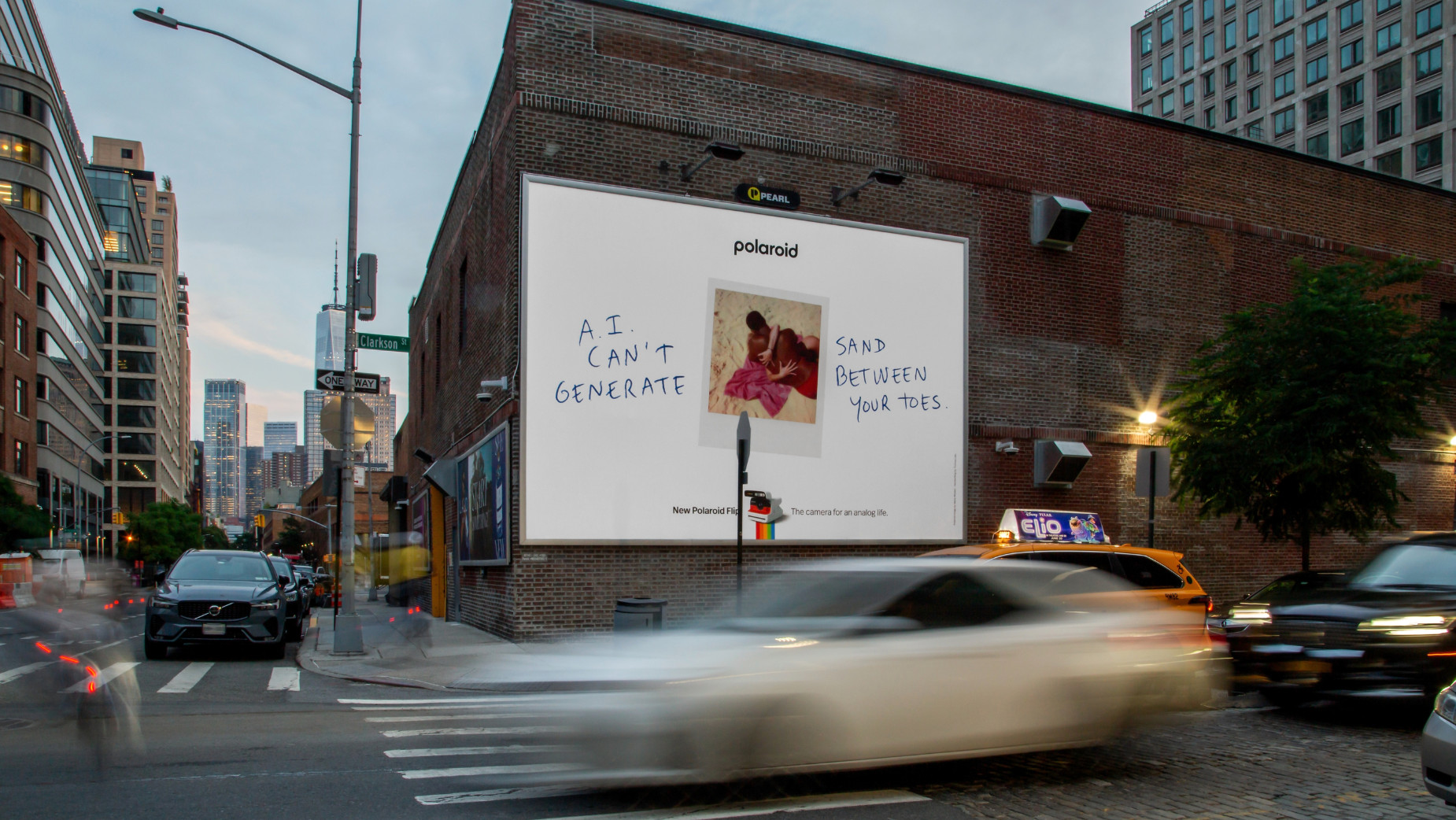
As the world becomes more digital, human experiences become more and more valuable.” Patricia Varella, Creative Director, Polaroid
With real life
Be transparent, like OMODA
AI is evolving at a staggering rate, with both Sam Altman, CEO of OpenAI, and Dario Amodei, CEO of Anthropic, calling for a slowdown in recent weeks. As the lines of creative ownership blur, the role and responsibility of not just showing, but championing, humanity is becoming a distinct brand edge. Brands, like car manufacturer OMODA, are creating supplementary content alongside core campaigns with the sole purpose of proving their efforts.
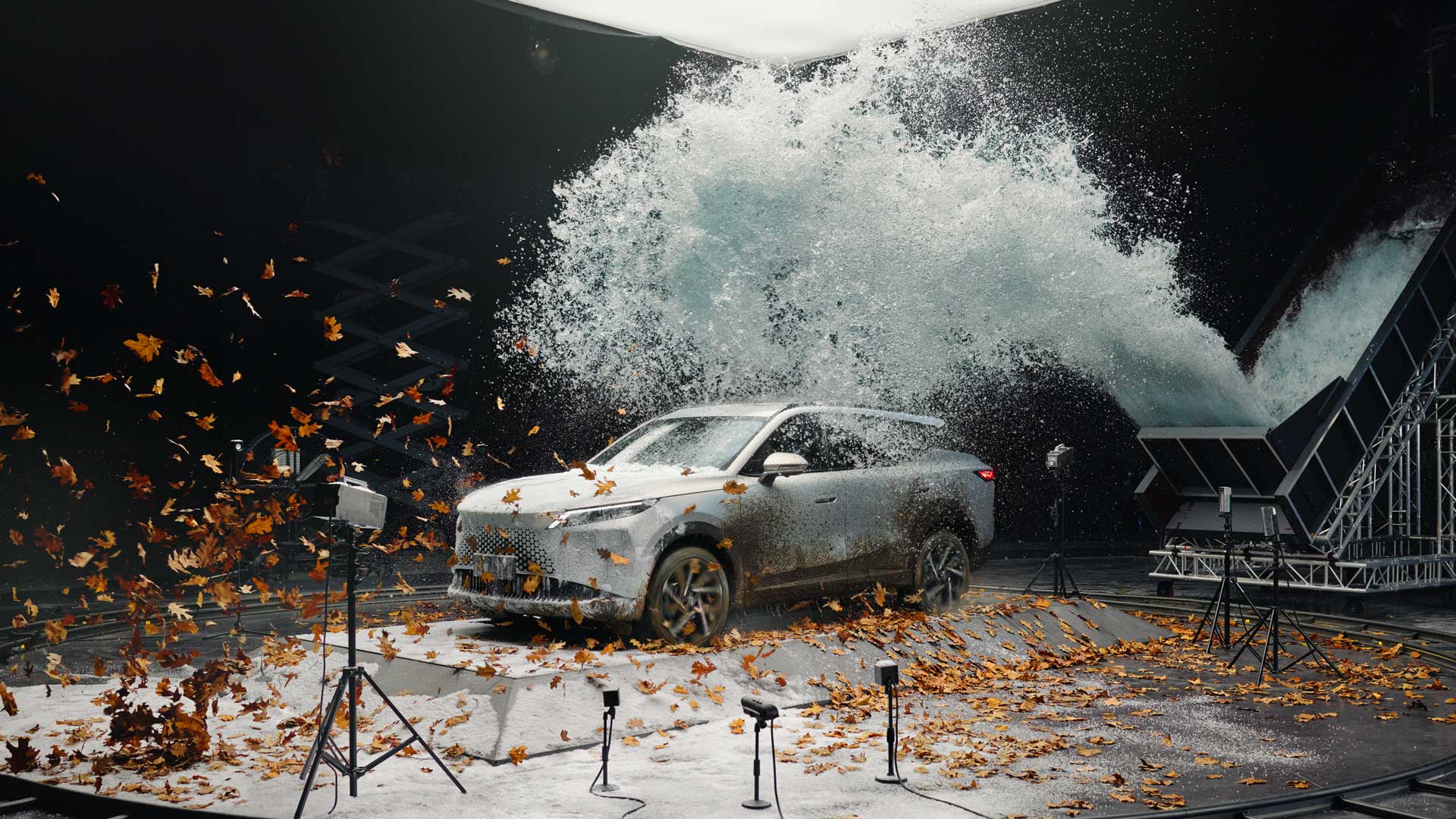
54% of consumers trust a brand less when its advertising looks AI-made. Source: Net Conversion, 2026
Brands with belonging
The easy headline is that Gen Z are turning their backs on AI. The more useful conclusion is that they’re seeking to regain control.
This generation readily adopts new tools when they provide genuine value. But they’re proving remarkably unwilling to accept the idea that their every move should be automated, optimised or accelerated simply because technology exists to do so. In their eyes, it’s a matter of ownership over efficiency, possibility over predictability and connection over convenience.
That creates an important role for brands. The next wave of long-term brand building won’t be won by offering shortcuts for the sake of it. It will be won by understanding that when friction collides with feeling, you create the very reason for Gen Z to stick around.