
All posts
Foreign familiarity – The unexpected bond with supermarkets beyond borders
This article was written by one of Epoch’s Senior Strategists, Emma Barraclough
A home away from home
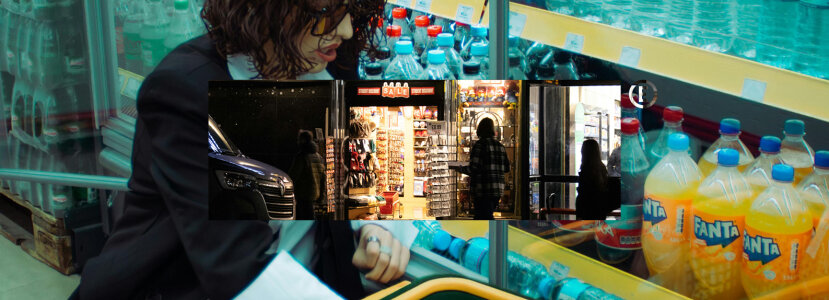
Supermarket tourism is soaring. With over 50 million posts related to ‘grocery store travel’ on TikTok (Timeout, 2025) , the humble supermarket has become an unlikely star of global exploration. According to YouGov (2024), over half of UK residents say they love, or like supermarkets abroad.
So, what’s the hook? Is it our innate British nosiness, a hunger for cultural insight or simply a savvy way to self-cater whilst travelling? Whatever the reason – grocery stores have gone from mundane to magnetic.
From chore to choice
The monotonous routine of food shopping is something we’re all too familiar with. Whether it’s a rushed pit stop for essentials or part of the weekend restock, the experience is predictable, boring and a bit dull. We turn to autopilot whilst navigating nearly 4,000 different displays, messages and products per visit (PRS IN VIVO).
Yet, a few hundred miles away, TikTok’s captioned ‘Travelling with people who view grocery stores abroad as a cultural experience >’ rack up hundreds of thousands of likes. The same act of shopping feels suddenly exciting and inspiring. Why? According to System 1, the key lies in the balance of combining originality with the reassuringly familiar. Research in Unlocking Profitable Growth (2017) reveals that ‘success comes from familiar elements that surround the injection of novelty’ – the kind that jolts us out of autopilot and back into awareness.
Balancing the familiar with the fresh
At the heart of this trend is something deeper than curiosity – the quiet search for belonging. System 1 goes onto say that for maximum acceptance, innovation should feel 80% familiar, 20% new. The same principle applies to how we travel. People want to feel like locals, not tourists. As one Reddit user put it: “Going to the grocery stores in foreign places is one of my favourite activities… It gives the feeling of being a resident and not just a passerby.”
A broader rising trend in slow travel has people prioritising depth over speed, soaking in more mindful experiences. Platforms like Airbnb have accelerated this shift, allowing travellers to live in residential neighbourhoods and experience a local way of life. And what’s more local than a grocery store? It’s the final 20% – the ‘new’ stuff – that makes the experience memorable.
A distinct smell, a harsh light, a foreign currency sticker. Although the offering is broadly similar, the packaging, the product and the presentation are different. A novelty.
Building bonds
The 80/20 rule is a powerful strategic lens in helping brands build stronger bonds across markets. But the value in its framework stretches further than just innovation. When it comes to brand identity, it reminds us that 80% of distinctive brand assets should feel familiar, while 20% can be refreshed to stay relevant. Whilst in segmentation, it supports a balance to focus on the loyal 80% while not ignoring the 20% of new consumers who drive growth.
Put simply: the 80/20 rule isn’t just a principle — it’s a strategic shortcut for smarter brand building. This balance between familiar and fresh is exactly what makes supermarket tourism so compelling as a lens for global brand strategy. These everyday spaces succeed because they offer the comforting familiar alongside the excitement of discovery. In a world overloaded with curated moments, perhaps it’s the fluorescent aisles and foreign snacks that bring us closest to the heart of a culture.